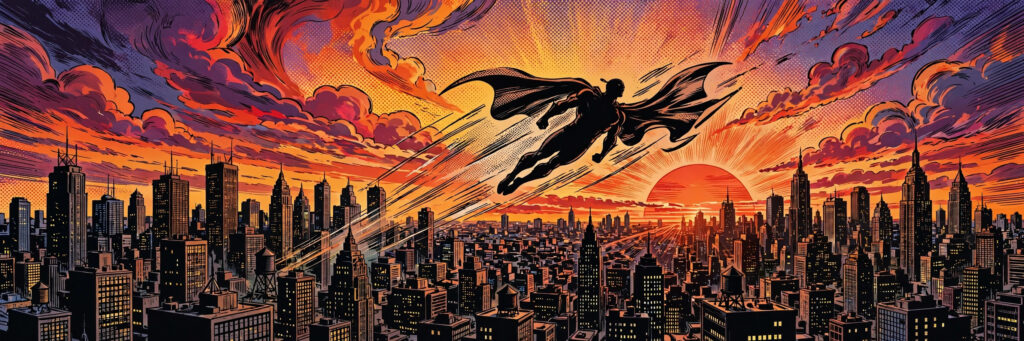
The Rise of Superhero Movies: How Comic Books Conquered Hollywood
Few entertainment stories are as remarkable as the journey of the superhero movie. A genre once dismissed as children’s fare — silly costumes and explosions in place of plot — now sits at the very top of popular culture. Superhero films draw some of the biggest audiences in the world, launch the careers of movie stars, and shape how an entire generation thinks about storytelling. But how did characters born in ink-and-paper comic books become the box office kings of modern cinema? The answer is a mix of cultural timing, technological breakthrough, and something much older: our timeless love of heroes.
From Newsprint to Cultural Icons
Long before the red carpet premieres, superheroes lived humble lives. They were born in the pages of comic books — inexpensive magazines sold at newsstands and corner shops, printed on cheap paper and aimed largely at kids. The earliest heroes appeared during difficult decades, when readers craved simple stories about good triumphing over evil. A caped figure who could fly, a masked detective who fought crime in dark alleys, a teenager who gained impossible powers — these were fantasies with heart.
For decades, comics were considered low culture. But beneath the colorful covers, comic books were building sprawling worlds, inventing unforgettable characters, and telling serialized stories across hundreds of issues. Generations of writers and artists refined these heroes, giving them rich backstories, personal flaws, and moral dilemmas. By the time Hollywood paid attention, the source material was far deeper than anyone outside the fan community realized.
The Bumpy Road to the Big Screen
Turning superheroes into movies was not easy. Early adaptations were limited by technology — a hero flying across the sky looked convincing only with strings and camera tricks, and audiences could see the strings. They were often campy, charming in their own way, but rarely taken seriously as cinema.
Everything began to change when special effects caught up with the imagination of comic books. Computer-generated imagery made the impossible look real: skyscraper battles and characters with godlike powers could finally appear on screen without breaking the illusion. Around the same time, filmmakers started treating the material with more respect. Instead of winking at the audience, they asked a new question: what would these stories look like if they happened in a world that felt real?
That shift in tone was the turning point. Superhero films stopped being just spectacles and started being stories — about responsibility, sacrifice, identity, and power. Audiences who had never picked up a comic book found themselves moved by heroes wrestling with the consequences of their gifts. The genre earned something it had never really had before: credibility.
Why We Can’t Get Enough of Superheroes
Modern Mythology
At their core, superhero stories are myths — the same kinds of tales humans have told for thousands of years. Every culture has legends of larger-than-life figures who battle monsters and save their people. The hero’s journey, the wise mentor, the fall from grace: these are ancient patterns, repackaged in capes and armor.
Superheroes speak to something primal. They embody our values — courage, kindness, standing up for the powerless — and they dramatize the eternal battle between good and evil. In a complicated world, there is deep comfort in a story where the right thing is clear and the hero keeps getting up.
Escapism With a Heart
Let’s be honest: it’s fun to watch someone fly. Superhero movies offer pure escapism — spectacular action, dazzling worlds, and the thrill of watching ordinary people do the impossible. But the best ones offer more than spectacle. They use fantasy to explore real human questions: What would you do with great power? How do you stay good when the world is not? What does it cost to save everyone else?
That blend of wish fulfillment and emotional depth is why the genre reaches so wide. Kids love the adventure; adults find the drama.
Heroes We See Ourselves In
The most enduring superheroes are not perfect. The greatest ones are deeply flawed — awkward, anxious, grieving, or struggling to balance their heroic duties with normal life. A teenager juggling school and saving the city. A billionaire haunted by his past. A soldier out of time.
Relatability is the secret ingredient. Powers may be fantasy, but the problems are real: guilt, doubt, fear, love, and the weight of responsibility. When a hero’s struggle mirrors our own, the fantasy becomes personal — and the character becomes unforgettable.
The Era of the Cinematic Universe
One of the most revolutionary ideas in modern filmmaking was the interconnected cinematic universe: instead of standalone films, studios began building shared worlds where heroes from different movies could meet and cross over into each other’s stories. It was an idea lifted directly from comic books, where characters had been sharing universes for decades.
This changed everything. Moviegoers no longer just followed a single character — they followed an entire world, with each film becoming a chapter in a larger saga and post-credit scenes teasing what came next. The result was unprecedented audience loyalty: viewers didn’t just want to see the next film; they needed to, because missing one meant missing part of the story.
The strategy worked spectacularly well. Over the past two decades, interconnected superhero franchises became the dominant force at the box office, turning lesser-known comic characters into household names. Rival studios raced to build their own universes, and the superhero film became the center of gravity for the entire industry — driving marketing, merchandise, streaming shows, and pop culture conversation.
The Highs — and the Occasional Fatigue
Every golden age has its challenges. At their peak, superhero movies delivered some of the most beloved blockbusters ever made: thrilling team-ups, emotional character arcs, and cultural moments that had audiences cheering in theaters. The genre proved it could be funny, tragic, political, and deeply moving.
But success brought excess. As studios rushed to keep up, the market filled with formulaic entries: predictable plots, interchangeable villains, and spectacle for spectacle’s sake. Some audiences began to feel “superhero fatigue” — a weariness with endless sequels and origin stories. Critics debated whether the genre was crowding out other kinds of films.
Yet fatigue is not the same as death. Genres survive by evolving. The western dominated Hollywood for decades before reinventing itself; the superhero film is now going through its own reinvention, experimenting with new tones, diverse heroes, and stories that push beyond the standard formula.
What Makes a Great Superhero Film?
Not every superhero movie works, and the ones that endure tend to share a few qualities:
- A hero worth caring about. Powers are forgettable; personality is not. The best films give their heroes clear desires, real flaws, and something meaningful at stake.
- A villain who believes they’re right. The strongest antagonists aren’t just obstacles — they’re mirrors of the hero, challenging their beliefs and forcing them to grow.
- Heart before spectacle. Action is thrilling, but it lands only when we care about who’s fighting and why. Emotional stakes make the explosions matter.
- Something to say. The most memorable entries use the genre to explore real ideas — justice, identity, power, and responsibility.
- Respect for the source, freedom to adapt. Great adaptations honor the spirit of the comics while understanding that film is a different medium with different strengths.
When these elements come together, a superhero movie stops being “just” a blockbuster and becomes something people remember for years.
Where Does the Genre Go Next?
The future of superhero films looks less like a victory lap and more like an open question — which is exciting. Here are the directions the genre appears to be heading:
- New heroes, new voices. Audiences are drawn to heroes from different backgrounds, cultures, and perspectives. The genre’s future belongs to stories that reflect a wider world.
- Genre-blending. The most interesting upcoming projects mix superheroes with other genres — horror, comedy, drama, mystery — proving the costume is a starting point, not a formula.
- Streaming and long-form storytelling. Streaming series have opened space for slower, character-driven superhero stories that films don’t have time to tell.
- Smaller stakes, bigger feelings. After years of world-ending threats, many fans crave intimate stories: heroes dealing with personal loss, community, and identity.
- Quality over quantity. The studios that thrive will likely be the ones that make fewer films — but make each one count.
Conclusion
The rise of superhero movies is really a story about storytelling itself. What began as inexpensive entertainment for kids became, through decades of craft and imagination, a modern mythology powerful enough to fill the world’s biggest screens. These films endure because they tap into something universal: the hope that one person — flawed, ordinary, and human — can make a difference.
Whether the genre’s next chapter is a reinvention, a quieter era, or something nobody has imagined yet, one thing is certain: superheroes aren’t going anywhere. The capes may change and the faces may change, but the hero who rises when it matters most will always find an audience.