Bollywood Explained: A Beginner’s Guide to Hindi Cinema
You’ve heard the word a thousand times, you’ve seen the dazzling dance numbers pop up on social media, and maybe a friend has begged you to “just watch one” — but what exactly is Bollywood? For hundreds of millions of people, it’s not just a film industry. It’s a way of life, a shared language of emotion, and the beating heart of popular culture in India and across its global diaspora. This beginner’s guide will take you inside the world of Hindi cinema: where it came from, how it works, why everyone is suddenly bursting into song, and how you can start watching today.
What Is Bollywood, Exactly?
The term “Bollywood” is a blend of “Bombay” (the former name of Mumbai, India’s film capital) and “Hollywood.” Technically, it refers to the Hindi-language film industry based in Mumbai — one of several thriving regional film industries in India. India is a multilingual country, and its cinema reflects that: there are major industries producing films in Tamil, Telugu, Malayalam, Bengali, Punjabi, and more.
But in everyday conversation — and especially outside India — “Bollywood” has become shorthand for Indian popular cinema as a whole. It’s the colorful, musical, larger-than-life style of filmmaking the world has come to recognize: extravagant costumes, sweeping romances, heart-stopping action, and, of course, those unforgettable song-and-dance sequences. Whatever your entry point, one thing is certain: once Bollywood hooks you, it doesn’t let go easily.
A Brief History of Hindi Cinema
The Silent Beginnings
Indian cinema was born in 1913 with the release of Raja Harishchandra, a silent film based on Hindu mythology. Audiences were mesmerized — here were their gods, kings, and legends, moving on a screen. The first talkie, Alam Ara, arrived in 1931, and the sound of spoken dialogue (and soon, song) changed everything. Music became an instant pillar of Indian filmmaking.
The Golden Age
The decades after India’s independence in 1947 are widely considered the golden age of Hindi cinema. Filmmakers like Guru Dutt, Bimal Roy, and Mehboob Khan crafted films that were both artistic triumphs and massive crowd-pleasers. Raj Kapoor, often called the Charlie Chaplin of India, made films that mixed comedy, pathos, and social commentary. This was the era that gave Hindi cinema its soul: stories rooted in Indian life, told with sweeping emotion and unforgettable music.
The Angry Young Man and the Masala Era
The 1970s and 80s brought Amitabh Bachchan, whose “angry young man” persona channeled the frustrations of a generation facing unemployment and inequality. Films became bigger, louder, and more formula-driven — the classic “masala” era of action-packed entertainers. The 1990s then swung the pendulum back toward romance, with family-friendly love stories that turned actors like Shah Rukh Khan into global icons.
Bollywood Goes Global
In recent years, Hindi cinema has transformed dramatically. Multiplex audiences, streaming platforms, and a new generation of filmmakers have brought in fresh storytelling — gritty thrillers, slice-of-life comedies, and socially conscious dramas now sit comfortably alongside traditional blockbusters. Meanwhile, Bollywood’s global footprint has exploded: sold-out premieres in London and Dubai, Hindi films trending on worldwide streaming charts, and dance challenges from Bollywood songs going viral on social media.
The Masala Formula: A Bit of Everything
One of the most delightful culture shocks for first-time viewers is discovering that a Bollywood film refuses to be just one genre. A single three-hour epic might contain:
- Romance — star-crossed lovers, stolen glances, and grand declarations
- Comedy — slapstick side characters and witty one-liners
- Action — gravity-defying fight scenes and heroic slow-motion entries
- Drama — tearful family reunions and moral dilemmas
- Music — elaborate song sequences that carry the emotional weight of the story
This all-in-one approach is called the “masala” formula — masala being the Hindi word for a blend of spices. The idea is simple: give every member of the family something to love, so the whole family shows up. It’s entertainment designed for maximum emotion, and it works brilliantly when done well.
Why Does Everyone Suddenly Start Singing and Dancing?
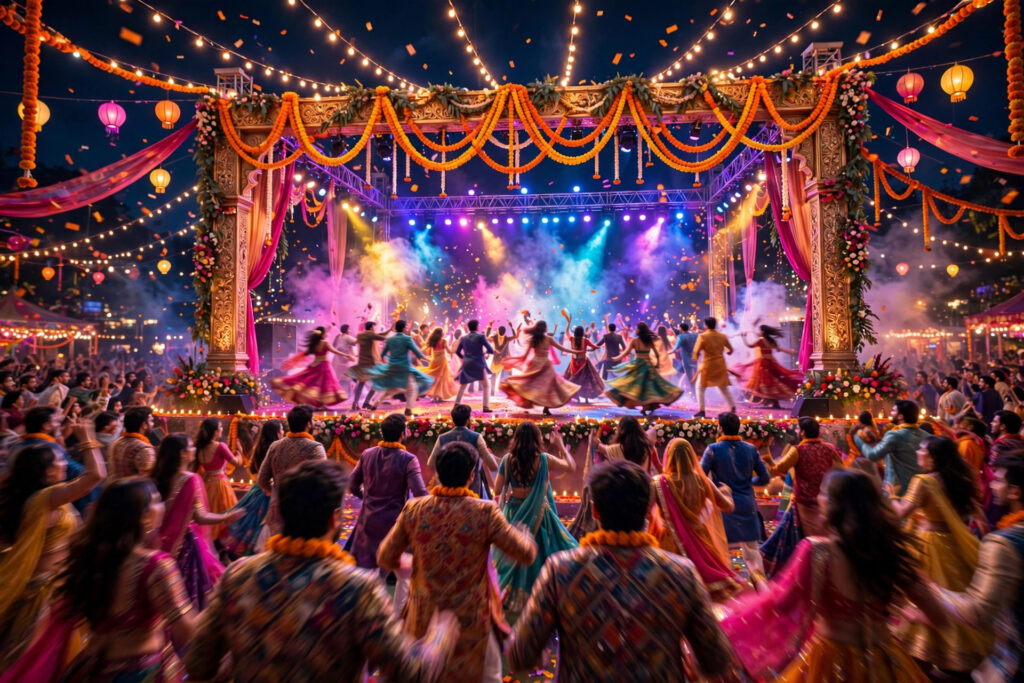
This is the question every newcomer asks, and the answer is surprisingly poetic. In Bollywood, songs aren’t interruptions — they’re the emotional core of the film. Where a Hollywood movie might use a montage or a quiet dialogue scene to show two characters falling in love, a Bollywood film gives them a song. The lyrics say what the characters can’t say out loud; the choreography turns feeling into spectacle.
Song sequences also serve a practical purpose. India has hundreds of languages, but a great melody crosses every boundary. Songs from hit films become independent cultural events — played at weddings, festivals, and parties for decades. It’s common for people to know every word of a film’s soundtrack without having ever seen the movie. The music industry and the film industry in India are essentially one and the same.
The Stars Are Bigger Than the Movies
In Bollywood, stardom operates on a level that’s hard to grasp until you witness it. Actors like Shah Rukh Khan, Salman Khan, and Aamir Khan — the three Khans who dominated the industry for decades — command fan followings that rival the devotion of sports fans or religious movements. First-day-first-show screenings feel like festivals, with fans dancing in theater aisles, showering the screen with flower petals, and chanting their hero’s name.
Newer stars have joined the pantheon in recent years, and the fan culture remains as passionate as ever. Part of the magic is that Bollywood stars cultivate genuine, decades-long relationships with their audiences. They show up — at awards shows, on talk shows, in the tabloids — and their off-screen personas become extensions of their on-screen mythologies.
Bollywood vs. Hollywood: Key Differences
If you’re coming from Western cinema, a few things will feel wonderfully unfamiliar:
- Length: Bollywood films traditionally run around two and a half to three hours, often with an intermission. The pacing is leisurely by design — there’s no rush to the next plot point.
- Emotion over realism: Logic takes a back seat to feeling. Heroes survive impossible odds, coincidences abound, and that’s entirely the point. The question isn’t “would this happen?” but “did you feel it?”
- Family at the center: Where Hollywood often celebrates the lone individual, Bollywood celebrates the family — its bonds, its conflicts, its sacrifices. Parents’ blessings, sibling loyalty, and family honor drive countless plots.
- Clear morality: Heroes are heroic, villains are villainous, and good usually triumphs in the end. It’s cathartic, unapologetic storytelling.
How to Start Watching Bollywood
Ready to dive in? Here’s a beginner-friendly roadmap:
- Start with a classic romance — the sweeping love stories of the 90s are the friendliest entry point and explain why the world fell in love with Bollywood in the first place.
- Try a modern drama or thriller — recent years have produced grounded, critically acclaimed films that feel closer to international arthouse cinema.
- Watch with subtitles, not dubs — the original Hindi performances (and the legendary playback singers behind them) lose their magic in translation.
- Give the songs a chance — don’t skip them. They’re the emotional highlights, and after two or three films, you’ll catch yourself humming along.
- Embrace the runtime — treat it like a mini-series rather than a movie. Make some snacks, settle in, and let the story breathe.
The World Can’t Get Enough
Bollywood’s global moment is no accident. In an era of algorithm-driven, franchise-heavy entertainment, Hindi cinema offers something increasingly rare: sincerity. It believes in love at first sight, in heroes worth cheering for, in endings that make you cry happy tears. Whether you’re drawn in by the music, the stars, or the sheer joyful excess of it all, Bollywood rewards curiosity generously. So pick a film, press play, and don’t be surprised when you find yourself dancing a little by the end. Welcome to the movies — Bollywood style.