How Voice Acting Works — The Hidden Stars Behind Your Favorite Animated Characters
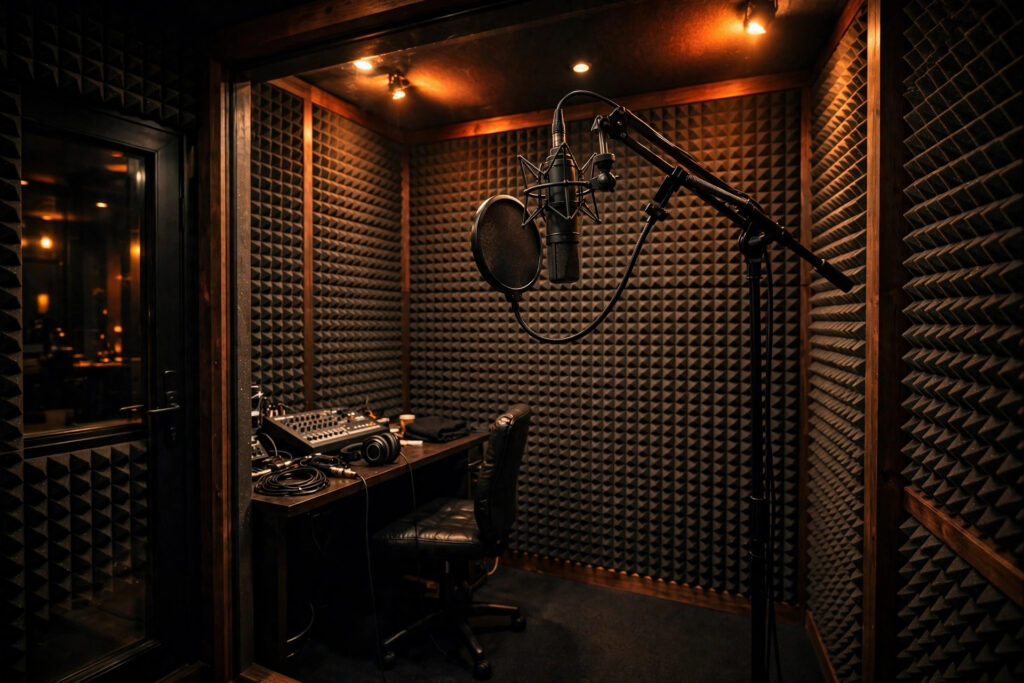
Every movie fan has a favorite animated character whose personality lives in their head. But behind that personality is a person standing in a small padded booth, wearing headphones, reading lines off a script — and doing something that looks deceptively simple but is one of the hardest acting disciplines in the business. Voice acting is the art of building an entire character out of nothing but sound: no face, no costume, no set.
Despite being everywhere — in cartoons, video games, commercials, audiobooks, and even smartphone assistants — voice acting remains one of the least understood crafts in entertainment. Here’s a look inside the booth.
What Makes Voice Acting Different From Screen Acting
On camera, an actor has an enormous toolkit: facial expressions, body language, wardrobe, the chemistry with co-stars in the room. A voice actor has exactly one instrument. Everything a character feels — joy, rage, heartbreak, menace — has to travel through a microphone and land on the listener.
This creates a strange paradox. Voice acting is often dismissed as “easier” than on-screen acting because there’s no memorizing blocking or hitting marks. In reality, it demands an almost exaggerated emotional control. A subtle eyebrow raise on screen can carry a scene; in the booth, that same emotion has to live in a half-second pause or a change in breath.
Another difference: voice actors almost always work alone. Animated projects typically record each actor separately, sometimes months apart. The voice actor performs to a blank screen, imagining the reaction of a co-star who isn’t there — and has to deliver precisely the emotional timing the scene needs without the natural rhythm of acting opposite another person.
The Anatomy of a Recording Session
A professional voice session starts long before the actor says a word. First comes preparation: reading the script, understanding the character’s age, personality, and emotional arc, and warming up the voice the way an athlete stretches before a game — tongue twisters, humming scales, lip trills to loosen up the jaw and vocal cords.
Inside the booth, it’s just the actor, a microphone, a script stand, and a pair of headphones. A director sits in the control room, listening on speakers and guiding the performance. A sound engineer watches levels, making sure nothing clips or distorts.
Then the red light goes on. The actor performs the same line multiple times — three, five, sometimes a dozen takes — each with a slightly different flavor. The director might say “give me one more, but softer this time,” or “can you sound a little more tired?” The actor has to adjust instantly and keep the character consistent across takes.
What surprises newcomers most is how physical the job is. Voice actors stand, gesture, and make faces in the booth — because the body shapes the voice. A great voice actor’s whole body performs even though nobody will ever see it.
Creating a Character Voice: The Actor’s Toolkit
So how does an actor invent a voice nobody has heard before? The process is part technique, part play.
Physical placement. Actors learn to place their voice in different parts of their body. Speaking from the chest produces a deep, authoritative sound; speaking from the nose creates a whiny or nasal character; pushing air from the top of the head gives a lighter, more childlike quality. Shifting placement is one of the fastest ways to sound like a completely different person.
Pitch, pace, and rhythm. Every character has a signature rhythm. A scheming villain might speak slowly with careful pauses, while a hyperactive sidekick fires words in rapid bursts.
Vocal texture. Raspy, breathy, gravelly, smooth — texture sells personality. Some actors achieve it naturally; others use safe techniques to add grit or airiness. Professional actors train to add texture without damaging their vocal cords, because the voice is their livelihood.
The character’s inner life. The best voice actors don’t just make funny voices. They build a backstory: age, background, confidence or insecurity. A voice built on psychology sounds real; one built on gimmicks sounds like a parody.
Interestingly, some of the most beloved animated performances are close to the actor’s natural voice, just heightened. A great performance isn’t always a wild transformation — sometimes it’s a small shift that unlocks something magical.
Dubbing: The Invisible Art of Voice Replacement
One of the most technically demanding corners of voice acting is dubbing — replacing dialogue in a production after the fact, often in another language. When an animated film or foreign series is released internationally, dubbing actors re-record every line so audiences can watch in their own language.
Dubbing has a brutal constraint: lip sync. The new dialogue has to roughly match the mouth movements on screen. Translators and adapters rewrite scripts not just for meaning but for timing — a line that takes four seconds in one language might need completely different words to fit the same four seconds in another. Dubbing actors then perform the adapted script while watching the footage, matching not only the timing but the emotional energy of the original performance.
There’s also domestic dubbing, called ADR (automated dialogue replacement), where actors re-record their own lines because the original on-set audio was ruined by background noise.
Good dubbing is invisible: the audience never thinks about it. Bad dubbing is distracting, which is why the world’s best dubbing industries treat it as a prestige craft with dedicated stars, fan followings, and rigorous standards.
Voice Acting in Video Games: A Different Beast
Video game voice acting has exploded into one of the biggest sectors of the industry, and it comes with its own challenges. Unlike linear film dialogue, game scripts branch: a character might say different lines depending on the player’s choices. Actors often record hundreds of variations of similar lines — greetings, battle cries, death sounds — in a single session.
The famous catch is context: actors frequently record without knowing the story. For secrecy reasons, scripts are sometimes delivered as isolated lines with minimal explanation. Game actors have to trust the director and their own instincts to fill in the emotional blanks.
Then there’s the sheer physical toll. Recording combat sounds — effort grunts, screams, falls — for hours is exhausting, and professional game actors train specifically to produce powerful sounds without damaging their voices.
Famous Techniques the Pros Swear By
Ask working voice actors about their craft and certain principles come up again and again:
- The voice follows the face. Even though nobody sees them, actors make the facial expression of the emotion they’re playing. Smile while reading a line and the warmth is audible.
- Stay hydrated, skip the dairy. Booth lore holds that water keeps the voice clear, while heavy foods can create mouth noise. Every actor develops their own pre-session rituals.
- Mark the script. Professionals annotate scripts with breath marks, emphasis points, and emotional shifts before recording, so the performance has a plan instead of hoping inspiration strikes.
- Protect the instrument. The voice is a muscle. Actors avoid screaming at concerts and rest between heavy sessions.
- Listen back. The best directors make actors listen to their own takes. Hearing yourself reveals habits — uptalking, mumbling, rushing — that you can’t catch in the moment.
How to Get Started in Voice Acting
It’s a dream job for many, and the path in is more accessible than it looks — but it is not a shortcut. Here’s how aspiring voice actors typically break in:
Train first. Take acting classes, not just “voice” classes. Improv training is especially prized because booth work is full of surprises — directors change direction mid-session and actors must adapt instantly.
Build a demo reel. A demo is a 60-to-90-second audio showcase of your range: commercial reads, character voices, narration. It’s the industry’s business card — five strong, distinct voices beat twenty mediocre ones.
Set up a home studio. In recent years, remote recording has become standard. A decent microphone, an audio interface, headphones, and a quiet, treated space (even a closet full of clothes works) are enough to audition from home. Clients expect broadcast-quality audio, so learning basic recording and editing is now part of the job.
Find work and representation. Beginners often start on online casting platforms, auditioning for small projects to build credits. As experience grows, many seek an agent who specializes in voice work.
Treat it like a business. Successful voice actors are freelancers. They manage schedules, invoices, marketing, and taxes. The romance of the booth is real, but the sustainability comes from professionalism: showing up prepared, taking direction gracefully, and delivering on time, every time.
Why These Hidden Stars Matter
The next time a cartoon makes you laugh or a game character breaks your heart, remember: somewhere, a person stood in a small room and gave that character a soul with nothing but their voice. Voice actors are the hidden stars of entertainment — unseen by design, unforgettable by craft.
The bottom line: voice acting is real acting, concentrated. One microphone, one voice, infinite characters — and a craft that rewards anyone willing to take it seriously.