How Movie Trailers Are Made: The Art of the Two-Minute Tease
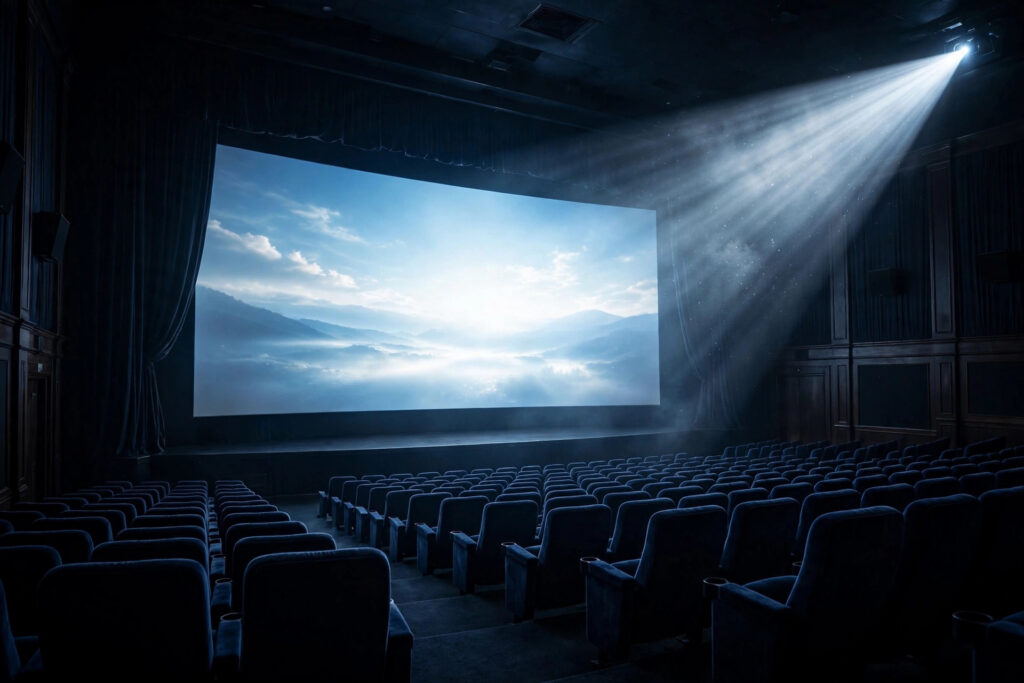
You know the feeling. The lights go down, the chatter fades, and for the next two and a half minutes you are completely somewhere else. Your pulse quickens. You lean forward in your seat. By the time the title slams onto the screen, you have already decided: you are seeing this movie.
A great movie trailer can do in 150 seconds what advertising campaigns struggle to do in months — turning a film nobody has heard of into a cultural event. But here is the part most moviegoers never realize: the people who cut that trailer probably never worked on the movie itself. Trailers are their own art form, built by specialists in a hidden corner of Hollywood using psychology, music, and editing tricks refined over decades. This is how the two-minute tease is really made.
The Trailer Has Exactly One Job
First, forget what you think a trailer is. A trailer is not a summary of the movie. It is not a shortened version of the story, and it is certainly not an honest preview of what you will experience in the theater. A trailer has exactly one job: to make you feel something powerful enough that you buy a ticket.
That feeling might be excitement, curiosity, fear, laughter, or wonder — but it has to be strong, and it has to arrive fast. Trailer editors talk about the opening five seconds the way sprinters talk about the starting blocks. If those first moments do not grab you, nothing that follows matters, because you have already reached for your phone.
This is why trailers rarely begin at the beginning of the story. They begin at the most gripping possible moment: a whispered line of dialogue, a stunning image, a joke that lands perfectly, a question with no answer. The trailer is not telling you a story. It is selling you a feeling, and the feeling has to be irresistible.
The Hidden Industry Behind the Magic
Here is Hollywood’s best-kept open secret: most movie trailers are not made by the filmmakers. They are made by specialized companies called trailer houses — boutique creative agencies whose entire business is cutting trailers, teasers, and TV spots.
A studio hands a trailer house its footage — sometimes the finished film, sometimes just a rough cut — along with a brief describing the target audience. From there, the trailer editors work with remarkable independence. Directors are often shown the trailer late in the process, and the trailer house’s cut is frequently the one that ends up in theaters.
Why outsource something so important? Because cutting trailers is a completely different skill from directing films. A film director thinks in two hours; a trailer editor thinks in two minutes. Trailer editors are specialists in compression — in finding the three perfect seconds inside a three-hour movie — and in understanding audiences with a marketer’s precision. The best of them are genuine artists, and a great trailer cut can become as famous as the film it advertises.
Anatomy of a Great Trailer
Watch any great trailer closely and you will notice it follows its own three-act structure, compressed into about 150 seconds.
The Cold Open
The first 10 to 20 seconds exist for one reason: to stop you from looking away. Usually a single striking moment — a line of dialogue delivered with total conviction, a strange and beautiful image, or a burst of action. No context, no explanation. Just impact. The cold open is a promise: keep watching, it only gets better.
The Build
The middle minute is where the trailer does its real work. Music starts to swell. Quick cuts establish the world, the characters, and the stakes — but always as fragments, never as explanation. You will notice a rhythm here: a funny beat, then a tense beat, then a spectacular beat, each one slightly bigger than the last.
Listen carefully and you will hear the trailer’s secret engine: the riser. That swelling sound growing louder beneath the images is engineered to raise your heart rate, and it works whether you notice it or not.
The Button
Every great trailer ends with a button — a final moment designed to be the thing you talk about afterward. It might be the biggest explosion, the funniest joke, the most shocking reveal, or a beloved character appearing for exactly two seconds. The button is immediately followed by the title card, often with a massive musical hit or a sudden, total silence. That contrast — noise, then nothing, then the title — is what burns the movie’s name into your memory.
Music: The Secret Weapon
If the images are the trailer’s body, the music is its nervous system. Trailer music is a specialized craft, and it rarely uses the film’s actual score. Instead, editors pull from libraries of purpose-built trailer music — tracks engineered with pounding percussion, soaring strings, and electronic pulses designed to escalate tension on command.
You know the sound even if you have never thought about it: the deep, resonant boom that shook theaters for years, the ticking clock under a heist montage, the slowed-down cover of a familiar pop song that makes a comedy trailer feel unexpectedly emotional. Music tells your body how to feel before your brain has caught up, which is exactly why it is so powerful in a format that only has two minutes.
The cleverest trailers play against expectations. A horror film cut to cheerful music becomes deeply unsettling. An action epic scored with a quiet piano ballad feels intimate and human. When the music surprises you, you remember the trailer — and the movie.
The Psychology of the Tease
Great trailers are built on a simple psychological principle: curiosity is more motivating than information. The moment you fully understand what a movie is about, the urgency to see it drops. So the best trailers are engineered to keep you in a state of delicious not-knowing.
This is why trailers ask questions they never answer. Who is that mysterious figure? What is in the box? Why is everyone running? Your brain hates an unanswered question — psychologists call this the curiosity gap — and the only way to close it is to buy a ticket.
Trailers also exploit pattern and payoff: just enough of a joke to make you laugh, then cut before the punchline; just enough of a fight to thrill you, then cut before the outcome. Each withheld payoff is a small debt your brain wants repaid — and the theater is the only place to collect.
When Trailers Lie
Of course, there is a darker side to the art. Because a trailer’s job is to sell tickets — not to represent the film honestly — trailers sometimes mislead, and audiences have learned to watch with one eyebrow raised.
The tricks are well documented: the comedy trailer that includes every funny scene, leaving the actual film oddly joke-free. The trailer that frames a slow drama as a thriller by cutting dialogue over action beats. The beloved actor who appears for thirty seconds in the trailer and barely a minute in the movie. In extreme cases, trailers have featured shots and lines that do not appear in the finished film at all.
Studios walk a fine line: a misleading trailer might fill seats on opening weekend, but audiences remember feeling tricked — and on social media, that backlash is instant. The smartest marketers have learned that the best long-term strategy is the honest tease: show the film’s true spirit, withhold its best surprises, and let the movie itself do the rest.
Trailers in the Streaming Era
The trailer is evolving. With more films premiering on streaming platforms, trailers now compete not with the theater marquee but with the infinite scroll. Trailers are cut shorter, punchier, and optimized for phones — where the first three seconds matter even more than in a cinema.
Social media has also changed the game. A trailer drop is now an event, dissected frame by frame within hours by fans hunting for hidden details — and studios plant Easter eggs designed to fuel that speculation. The trailer is no longer just an advertisement; it is the opening chapter of the movie’s online life.
And yet, for all the changes, the core of the craft is untouched. Whether it plays before a blockbuster or autoplays in your feed, a great trailer still does what it has always done: it makes you feel something, fast — and leaves you needing more.
Conclusion
The next time a trailer gives you goosebumps, notice what just happened. In about 150 seconds, a team of specialists you will never meet used music, editing, and psychology to rearrange your weekend plans. That is not an accident — it is a craft, one of the most precise and least understood art forms in entertainment.
The movie might be two hours long, but the trailer is where the seduction happens. And now you know exactly how the trick works — which, if the trailer did its job, will not stop you from buying the ticket anyway.