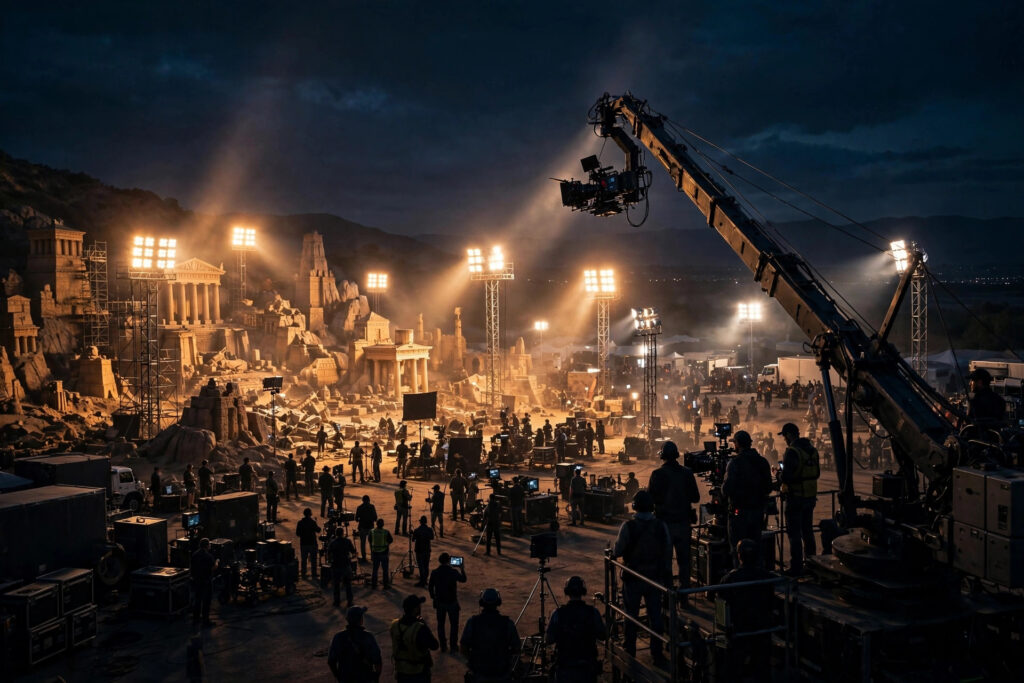
How Hollywood Blockbusters Are Really Made: From Script to Screen
Have you ever watched a city explode on the big screen and wondered how it all came together? Hollywood blockbusters don’t appear out of thin air. Each one is the result of years of planning, thousands of people, and staggering amounts of money. Here’s the full journey, from first idea to opening night, step by step.
Where the Idea Comes From
Every blockbuster starts with an idea, and Hollywood ideas come from everywhere: original screenplays, bestselling novels, comic books, video games, and familiar franchises. In recent years, studios have leaned heavily on recognizable characters and existing series, because a familiar name makes it easier to draw a crowd.
But an idea is only the beginning. During development, the raw concept gets shaped into something a studio might fund. Writers pitch to producers, producers pitch to studios, and projects often bounce between writers, directors, and executives for years — a process insiders call “development hell.” Studios also study trends and audience reactions to decide what’s worth pursuing, hunting for the sweet spot between a fresh story and a safe bet.
Writing the Script
Once development begins in earnest, the screenplay becomes the centerpiece of everything. A typical two-hour movie script runs about 100 to 120 pages, with each page roughly equaling one minute of screen time. Don’t let that modest page count fool you — writing a blockbuster script is grueling work.
Most big movies follow a familiar rhythm: an attention-grabbing opening, a hero with a clear goal, rising obstacles, a turning point near the middle, and a high-stakes climax. The best blockbusters make the familiar feel new.
Scripts rarely have just one writer. One writer may draft it, another polishes the dialogue, and specialists called “script doctors” fix late-stage story problems. Each draft passes through producers, executives, and the director — and by the time a script is locked for filming, it may look very different from the original pitch.
Getting the Greenlight
This is the moment every filmmaker dreams about: the studio officially agrees to make the movie. It’s called the greenlight, and for a blockbuster it involves enormous financial risk. Big-budget films often cost hundreds of millions of dollars to produce — and that’s before marketing.
Studios weigh several factors before saying yes:
- The script — Is the story strong, clear, and emotionally engaging?
- The talent attached — A popular director or bankable star reduces risk.
- The franchise factor — Does it belong to a series with a built-in fan base?
- Global potential — Will it play well internationally? Can it sell merchandise and tie-ins?
Sometimes one studio funds the entire film; other times, multiple studios and investors split the cost — and the profits. This co-financing is common for the biggest movies, where the price tag is too high for one company to carry alone. Once the money is secured and contracts are signed, the movie officially becomes real.
Pre-Production: Building the Machine
With the greenlight in hand, pre-production begins — the planning phase where hundreds of decisions are made before a single frame is shot. This is when the director’s vision turns into a practical plan.
Casting comes first. Directors, producers, and casting directors hunt for the right actors for every role. A major star can be make-or-break, since familiar faces sell tickets worldwide — but casting is also about chemistry and finding the perfect fit for each character, large or small.
Next, locations are scouted. Some scenes are shot on sound stages, but blockbusters often travel the globe for breathtaking settings: deserts, ancient cities, tropical islands. Scouts evaluate hundreds of spots, weighing light, logistics, and filming permits.
Meanwhile, artists draw storyboards — comic-style panels mapping key scenes shot by shot — while costume designers sketch outfits, set designers build models, and stunt coordinators plan the action. By the end of pre-production, the entire movie exists on paper before it exists on film.
Lights, Camera, Action: Filming
Principal photography — the actual filming — is where the magic becomes visible, and it’s the most expensive phase day by day. A blockbuster shoot can last several months to over a year, with hundreds of crew members working six days a week.
A typical day starts before sunrise. The crew sets up cameras, lighting, and sound while actors go through hair, makeup, and wardrobe — a process that can take hours for elaborate costumes or prosthetics. The director then rehearses each scene, deciding where actors move and where the camera goes.
Filming rarely happens in story order. Scenes are grouped by location and logistics — all the desert scenes might be shot in one week, wherever they fall in the story. Actors jump between emotional moments out of sequence, sometimes filming the ending before the beginning.
Action sequences get special treatment. Big stunts are choreographed like elaborate dances, with stunt doubles, safety rigs, and dedicated camera units. Some directors favor practical effects — real explosions and real locations — while others lean on digital work added later; most modern blockbusters blend both. Each evening, the director reviews the day’s footage in “dailies,” since reshoots are costly.
The Magic of Visual Effects
In today’s blockbusters, what you see on screen is often only half real. Visual effects — VFX — have become essential, with digital artists creating entire cities, alien worlds, and fantasy creatures.
The process often starts on set with green or blue screens. Actors perform in front of these blank backgrounds, which artists later replace with computer-generated environments. Motion capture records actors’ movements and expressions and applies them to digital characters, producing performances that feel surprisingly human.
VFX work is painstaking: a single complex shot can take a team of artists weeks or months, and blockbusters routinely contain well over a thousand effects shots. The work often continues long after filming wraps, sometimes until the final weeks before release. But effects only matter when they serve the story — the most memorable moments endure because we cared about the characters in the middle of the spectacle.
Post-Production: Editing, Sound, and Music
Once filming ends, post-production shapes the raw material into the film you’ll watch — a phase that can take many months.
Editing comes first. Editors sift through hundreds of hours of footage and assemble a coherent story, controlling the pacing of every scene. A skilled editor can transform a movie — tightening a slow middle, building tension before a climax. Directors work through multiple cuts, from rough assembly to the final locked picture.
Sound design is where the movie truly comes alive. Dialogue is cleaned up or re-recorded, and designers create thousands of effects — footsteps, punches, engine roars — often recorded from real-world sources and creatively transformed. Without great sound, action feels empty and quiet moments feel flat.
Music adds the final emotional layer. Composers write original scores that underline every mood, from soaring heroic themes to tense strings. The right music at the right moment can make an audience cheer, cry, or hold its breath. Color grading finishes the job, giving the film its distinctive visual look.
Marketing and Trailers
Here’s what surprises many people: a blockbuster’s marketing budget can rival its production budget. It usually starts with a teaser trailer — a short, mysterious glimpse released months in advance to spark curiosity. Full trailers follow, carefully engineered to maximize excitement without giving too much away.
Marketing goes far beyond trailers: posters, TV spots, social media campaigns, and behind-the-scenes featurettes. Stars embark on global press tours, and brand partnerships put characters on toys, clothing, and food packaging. A well-run campaign builds a sense of event, making opening weekend feel like something you can’t afford to miss.
Release Day and Beyond
After years of work, the film finally reaches theaters — and release strategy is a science of its own. Studios pick dates carefully, avoiding clashes with rival blockbusters while targeting holidays and summer months. Major films often open simultaneously worldwide to build global momentum.
Opening weekend is the moment of truth. Strong early results generate positive headlines, drawing even more viewers in the weeks that follow. But the journey doesn’t end at the box office: after its theatrical run, the film continues on streaming platforms, digital rentals, and physical media, each stage finding new audiences.
If the movie is a hit, the cycle begins again. Studios fast-track sequels, spin-offs, and cinematic universes, because a proven franchise is the closest thing Hollywood has to a sure thing.
Conclusion
From a writer’s first spark of inspiration to a packed theater on opening night, making a Hollywood blockbuster is a marathon, not a sprint. It takes screenwriters, directors, actors, stunt performers, camera crews, digital artists, editors, sound designers, composers, and marketing teams — often thousands of people over several years.
The next time you watch one of these massive films, look a little closer. Behind every explosion and every emotional moment is an army of craftspeople who spent months making it feel effortless. That invisible effort is the real magic of Hollywood — and it’s why, decades after the first blockbusters thrilled audiences, we still can’t get enough of them.