Soap Operas: How Daytime Dramas Ruled Television for Decades
For decades, millions of people planned their afternoons around fictional towns where nobody ever truly stayed dead, weddings were interrupted at the altar with clockwork regularity, and a single raised eyebrow could carry more drama than an entire action movie. Soap operas — daytime television’s long-running serial dramas — were once the most powerful force in American television, commanding enormous daily audiences and running for half a century or more. This is the story of how a humble radio format sponsored by detergent companies became a cultural institution, why it eventually faded, and how its DNA still runs through the television we binge today.
Born on the Radio: Where “Soap” Comes From
The term “soap opera” has nothing to do with cleanliness and everything to do with advertising. In the 1930s, radio networks aired serialized domestic dramas aimed squarely at homemakers — and the companies that made soap, detergent, and other household products bought up the sponsorship slots. Shows were quite literally brought to you by soap, and the nickname stuck.
These early radio soaps ran in fifteen-minute installments, five days a week. The stories were deliberately simple and emotional: family conflicts, romantic betrayals, long-lost relatives, moral dilemmas. But the format was revolutionary. For the first time, a story didn’t end — it just continued, day after day, month after month. Listeners formed deep attachments to characters they’d never seen, and the cliffhanger ending became the engine of it all: every episode closed on an unanswered question, practically begging the audience to tune in tomorrow.
By the late 1930s, daytime radio belonged to the soaps: cheap to produce, fiercely loyal audiences, and perfect for advertisers. When television arrived, the format simply packed its bags and moved over.
The Leap to Television
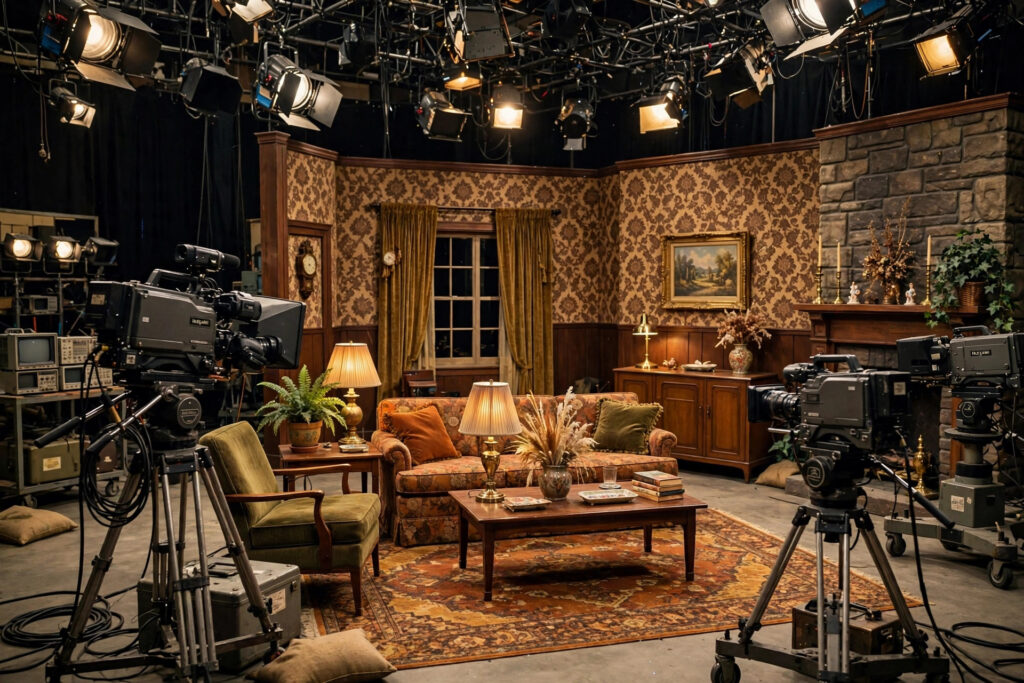
Television’s early years borrowed heavily from radio, and soap operas were among the first formats to make the jump. The earliest TV soaps in the late 1940s and early 1950s were broadcast live, often from cramped studios, with actors performing in real time and sets wobbling behind them. Mistakes aired. Lines were flubbed. Nobody cared — the audience was hooked on the stories.
Over the following decades, fifteen minutes became thirty, then a full hour. Networks stacked soaps back to back through the afternoon — the same winning formula for advertisers, and a daily ritual as fixed as lunch for viewers.
The Golden Era: When Soaps Ruled the Airwaves
The 1970s and 1980s were the undisputed golden age of the soap opera. At their peak, the biggest daytime dramas drew audiences in the tens of millions every single day — numbers that dwarf what most prestige dramas pull today. Storylines crossed over from entertainment pages into real news coverage. Fan magazines thrived. Actors became genuine celebrities with fan mail by the truckload.
This was the era of the “supercouple” — pairings so beloved that their weddings became national events, with one early-1980s soap wedding drawing one of the largest daytime audiences in history. Viewers had spent years invested in these relationships, episode by episode, and the payoff felt as real as any actual celebration.
Soaps also grew bolder. Writers began weaving in social issues — addiction, illness, prejudice, family breakdown — reaching audiences who might never watch a documentary on the subject but would absorb the same lessons through characters they loved. The format’s slow pace turned out to be its superpower: a storyline could unfold over months, giving weight and complexity that a two-hour movie could never match.
The Cliffhanger Formula
Every soap opera ran on the same narrative engine: the cliffhanger. Episodes didn’t end — they paused, always at the worst possible moment. A character opened a door to find someone standing there. A test result arrived in an envelope. A familiar face appeared in a place it had no business being. Then the music swelled, the screen faded, and viewers were left to stew for twenty-four hours.
The technique worked at every scale: mini-cliffhangers before commercial breaks, major ones on Fridays to carry viewers through the weekend, and the biggest shocks saved for season finales and sweeps periods. It was manipulation, pure and simple — and audiences adored it.
Five Episodes a Week, Forever
What made soaps truly remarkable was the sheer industrial scale of their production. A single soap opera could produce around 250 original episodes a year — more than most primetime series make in a decade. Actors routinely memorized dozens of pages of dialogue overnight. Crews shot multiple episodes per day, sometimes finishing a full hour of television in a single frantic session.
Writers worked under relentless pressure, generating storylines years ahead while rewriting today’s scripts at the last minute. Characters were recast, resurrected, given amnesia, revealed to have secret twins — whatever kept the machine running. It was factory storytelling that, at its best, produced emotional power no other format could replicate.
Why Millions Were Hooked
The soap’s grip went far beyond habit. Researchers have identified several reasons the format was so addictive:
- Parasocial relationships. Viewers spent more time with soap characters than with many real people in their lives. Over years of daily episodes, fictional families started to feel like extended family.
- Ritual and routine. The soap aired at the same time every day, becoming part of the rhythm of life — as comforting and predictable as a favorite meal.
- Slow-burn storytelling. Because plots unfolded over months, emotional payoffs felt earned. A reunion, a revelation, or a revenge landed harder after a year of buildup than any movie climax could.
- Moral clarity with messy emotions. Soaps dealt in big feelings — love, betrayal, jealousy, forgiveness — while keeping the moral stakes legible. Good and evil were recognizable, even when characters crossed the line.
- Community. Watching a soap was a social activity. People discussed storylines at work, at school, and over the phone. Being a fan meant belonging to a conversation that never ended.
The Fall: What Killed the Daytime Drama
No empire lasts forever, and the soap opera’s decline came from several directions at once. As more women entered the full-time workforce from the 1980s onward, the traditional daytime audience simply wasn’t home at two in the afternoon anymore. Cable television fractured the audience into a hundred niches. Talk shows and courtroom programs proved far cheaper to produce than scripted drama — why pay for actors, writers, and sets when two people arguing on a couch drew similar ratings for a fraction of the cost?
Major news events didn’t help: when networks preempted soaps for extended real-world coverage in the 1990s, many viewers discovered they could live without their daily fix — and never came back. Then DVRs and streaming finished the job, destroying the appointment viewing the format depended on.
One by one, the legendary soaps were cancelled. Shows that had run for forty, fifty, even sixty years aired their final episodes to devoted but shrinking audiences. It felt like the end of an era, because it was.
The Legacy: Soaps Never Really Died
Here’s the twist worthy of a Friday cliffhanger: the soap opera didn’t die. It just changed its clothes.
Look at modern television and you’ll see soap DNA everywhere. Prestige dramas with season-long arcs and shocking betrayals are soaps with bigger budgets. Telenovelas remain global powerhouses, and the Korean dramas that conquered streaming run on the same engine: heightened emotion, cliffhanger endings, and couples the audience desperately roots for.
Reality television borrowed the formula too: cast a group of big personalities, manufacture conflict, end every episode on a tease. Even the binge model owes the soap a debt — the “just one more episode” impulse is the cliffhanger perfected for the streaming age.
And a handful of daytime soaps are still running, decades after their debuts, kept alive by the most loyal fanbase in television. They are living museums of a format that once ruled the airwaves — and a reminder that the appetite for endless, emotional, gloriously dramatic storytelling never really goes away.
The End of an Episode, Not the Story
Soap operas taught television its most important lesson: audiences will follow a story forever if you give them characters worth loving and questions worth answering. The format rose on radio, conquered the television afternoon, and faded when the world changed. But every serialized drama you binge today — every show ending an episode with a gasp — carries the soap’s torch. The organ music faded; the cliffhanger lives on.